Baal is Still There
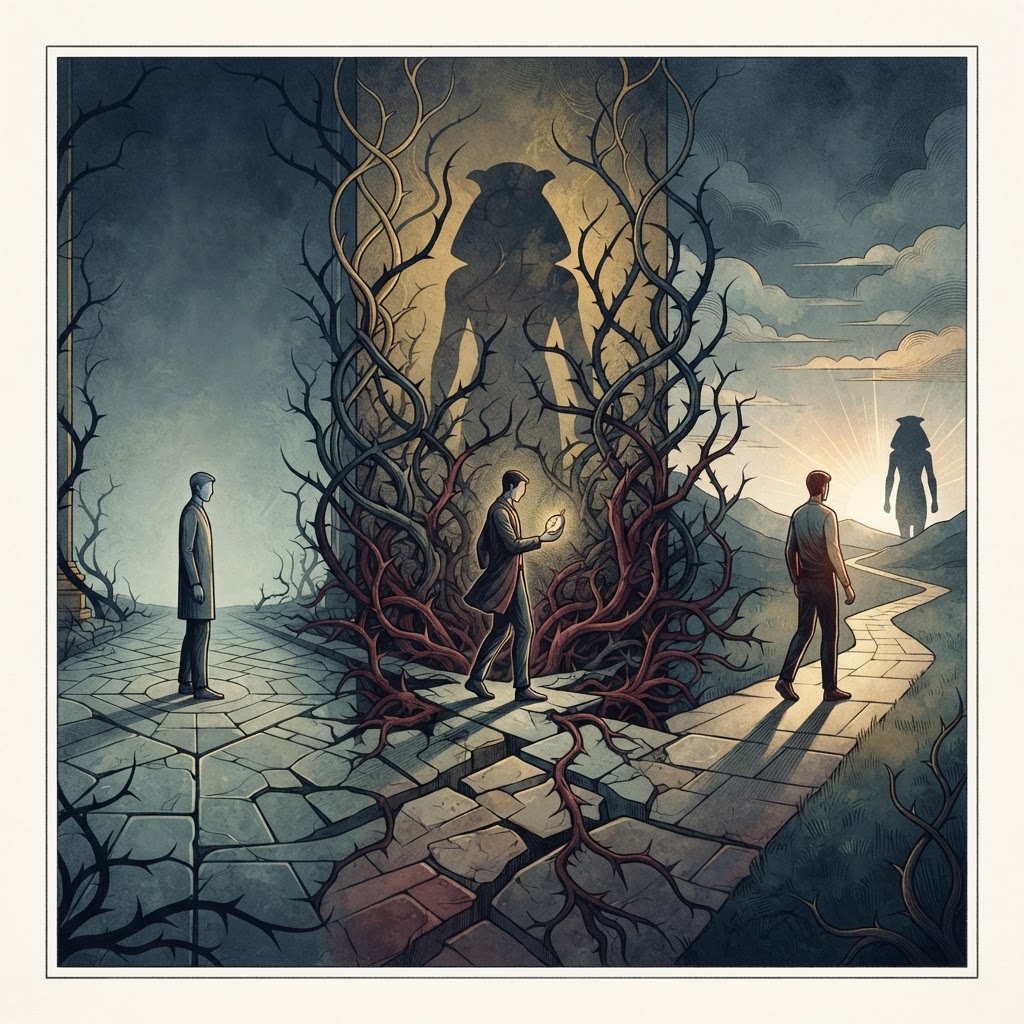
The "Baal is still here" structure is based on the idea that an invisible force continues to organize the world behind a facade of rationality, technology, or neutrality. The narrative engine is a progressive unveiling: what seemed dead or outdated reveals itself to be active in new forms. The story begins in a world that believes itself to be disenchanted, before diffuse signs suggest a disturbing coherence. The protagonist then discovers that this apparent void conceals a structuring power, leading them to a dizzying confrontation with a principle of systemic domination or corruption rather than a single adversary. This tension is accentuated by a collective denial that transforms the hero's quest into a test of lucidity. The major interest of this approach lies in its ability to anchor symbolic thrillers, dystopias, or spiritual and political fictions where the struggle becomes a form of political or symbolic exorcism. The final transformation of the protagonist, sometimes ambiguous, leaves the reader to wonder about the real impact of the experience. In the OGMAI ecosystem, this structure offers great flexibility: it can serve as the main backbone to carry the overall plot, or as a sub-structure. In the latter case, it enriches an investigation, develops a parallel emotional line, or gives a strong trajectory to a secondary character, illustrating how an ancient presence can haunt the present.